
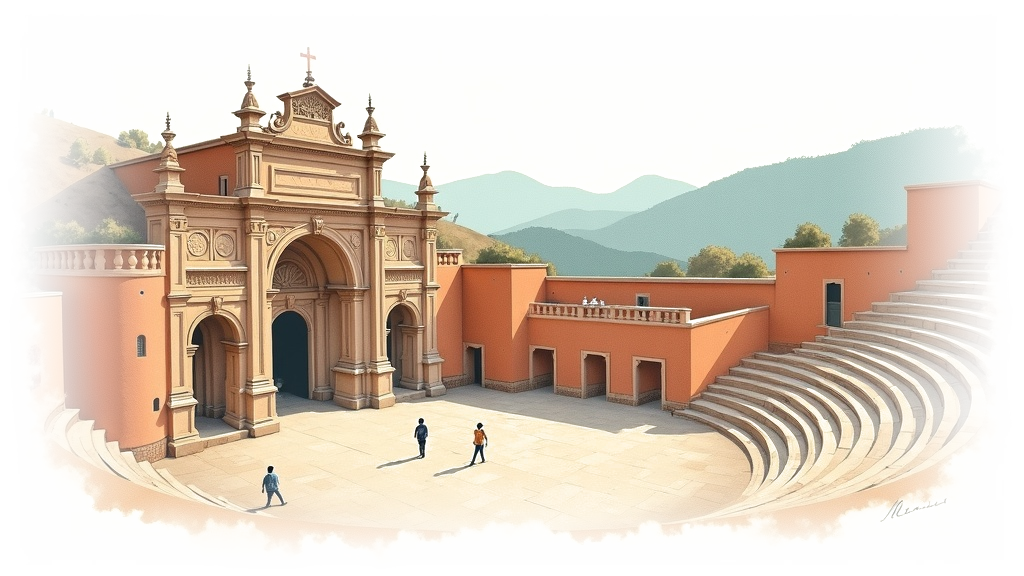
Plovdiv, Bulgaria has one of the most extraordinary performance venues on the planet, and it's been open for business since roughly 90 AD. The Roman Theatre of Philippopolis sits on a hillside in the heart of the city, its marble tiers still catching the last of the evening light the same way they did when Emperor Domitian's architects first laid the stone. And here's the thing that separates it from every other ancient ruin you've ever walked around with a laminated map: you can buy a ticket and watch a live performance there tonight.
Why a 2,000-Year-Old Stage Still Hits Different
Most Roman theatres end up behind a rope. You peer at them from a designated viewing platform, read a plaque, take a photo, move on. The Roman theatre Plovdiv still uses is different. It seats around 7,000 people, the acoustics work without a single microphone assist, and the city treats it as a functioning cultural venue rather than a relic. Opera companies set up full productions here. Jazz bands play under the stars. Shakespeare gets performed in Bulgarian with a backdrop of ancient stone that would make any set designer quit in despair.
What makes it genuinely remarkable is the continuity. The theatre was buried under centuries of sediment, rediscovered during a landslide in 1972, excavated, and then essentially put straight back to work. Two thousand years of silence, and then the lights came on again. Sitting in those marble seats, you're not consuming history at a remove. You're part of an audience tradition that stretches back to Roman Thrace. That feeling isn't manufactured. It's just there, in the stone, the open sky, and the fact that the person next to you is unwrapping a chocolate bar exactly like every theatre-goer since time began.
The setting alone would justify the trip. The theatre faces south across Plovdiv's old town, the Rhodope Mountains sitting low on the horizon at dusk. When the stage lights come up and the mountains go dark behind the performers, you'll understand why this city was once considered one of the finest in the Roman Empire.
When to Go and What You'll Find There
The main performance season runs from late spring through early autumn, roughly May to October. July and August are the peak months for programming, with the Plovdiv Opera performing outdoors alongside international festival acts. The Annual Opera Open festival typically takes place in June and July, drawing serious productions with full orchestras and elaborate staging. Evenings in summer are warm and usually dry, which matters when your venue has no roof.
If opera isn't your thing, don't write it off. The theatre hosts rock concerts, folk music festivals, theatre productions, and film screenings across the season. The programming is genuinely varied. Check the schedule in advance because the calendar fills up and the better seats go fast.
A few practical things worth knowing before you arrive. Wear layers. The temperature drops once the sun goes behind the hills, and marble holds the cold. The seats are original stone, so a small cushion from home isn't a ridiculous idea. It's a hillside venue, which means the walk up from Plovdiv's old town takes about ten minutes on foot along cobbled streets. Comfortable shoes matter more than you might think.
The theatre is also worth visiting during the day even without a performance. Entry to the archaeological site costs a few euros, and you can walk the stage, examine the original column capitals, and read about the excavation. But come back at night if you can. The daytime visit is informative. The evening one is the experience.
Book Before You Travel
Tickets for popular performances sell out weeks ahead, especially during festival season. You don't want to arrive in Plovdiv in July to find that every seat for the Saturday opera is gone. Booking in advance through places-to-go-travel.com via Tiqets means you can lock in your seats from home, skip the on-site queue, and show up knowing exactly where you're sitting in a 2,000-year-old theatre.
There's something quietly absurd and completely wonderful about that transaction. You open an app, pick a seat number in an ancient Roman amphitheatre, and get a confirmation email. Then you fly to Bulgaria, walk up a cobbled hill at dusk, find your row in a venue that was already old when the Western Roman Empire fell, and watch a soprano hit a high C while the stars come out over the Rhodope Mountains.
That's not a moment you're going to forget. Go book it.