
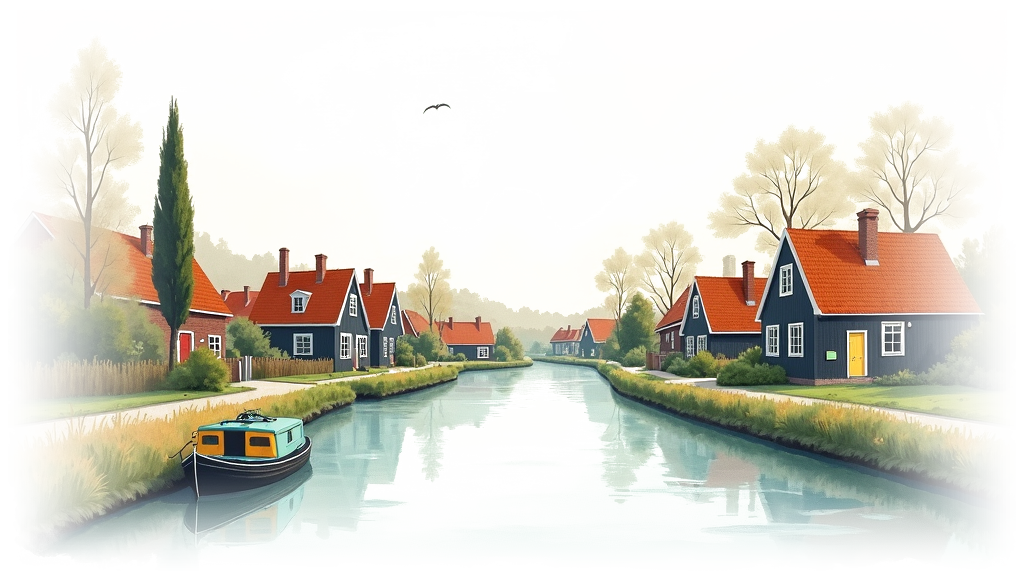
Giethoorn village canals no roads — that's not a typo, and it's not a gimmick. This small settlement in the Dutch province of Overijssel genuinely has no streets running through its historic core. You arrive by boat, by foot along narrow footpaths, or by bicycle on the raised dykes that skirt the water's edge. That's it. No traffic lights, no car engines, no exhaust fumes drifting past your coffee cup. Just the low creak of wooden bridges, the ripple of canal water, and the occasional quack from a duck who clearly thinks it owns the place.
Why Giethoorn Hits Differently From Every Other "Quiet Village"
Most villages that claim to be peaceful still have a road cutting through the middle. A delivery van. A tractor. Something with an engine that breaks the spell. Giethoorn doesn't have that problem because it was built around water from the start.
The village dates back to the 13th century, when settlers dug canals to extract peat from the boggy ground. Over time, those peat-cutting channels became the main arteries of daily life. Farmers loaded their goods onto flat-bottomed boats called punters. Families visited neighbours by water. The land between the canals formed into small islands, each one connected to the next by those arching wooden bridges — more than 180 of them scattered across the village today.
What that history means for you, practically speaking, is that you can rent a small electric boat, step away from the dock, and within about three minutes feel genuinely removed from the rhythm of modern life. The thatched farmhouses sit low along the water. Gardens spill right to the canal edge. You'll float past front doors that open directly onto the water, past vegetable plots and rose bushes and cats sitting on windowsills watching you drift by with an expression of complete indifference.
It's not dramatic scenery. There are no cliffs, no sweeping vistas. What Giethoorn gives you instead is an almost absurd level of quiet for a place that receives visitors from across the world. And because the canals are narrow and the speed limit on the water is essentially "barely moving," the whole experience stays gentle throughout.
When to Go and How to Get There
The sweet spot for timing is May through early July. The Dutch countryside blooms hard in spring, and you'll catch tulip season bleeding into a long stretch of warm, green days. The village gets busy in high summer, particularly August, when Dutch families are on holiday and tour groups arrive in numbers. September is a solid backup — the crowds thin out, the light turns golden, and you're still likely to get dry weather.
Avoid the peak of summer if you want the canals to feel calm rather than congested. Giethoorn's waterways are wide enough for charm but not wide enough for gridlock without it showing.
Getting there takes a little planning, which honestly adds to the appeal. You're not stumbling into somewhere that's easy to reach. From Amsterdam, take the train to Zwolle, then a regional bus (line 70 toward Steenwijk) to the village. The whole journey runs about two hours. Alternatively, if you're driving, you park outside the historic core — on the edge of the village — and continue on foot or by water from there. The car doesn't come with you. That transition, from road to footpath to boat, is part of the experience.
Once you're in the village, you hire your boat from one of several local operators near the main canal entrance. Electric punters are the standard choice — quiet, easy to handle even without any boating experience, and environmentally sensible on a waterway this delicate. You can also hire a canoe or kayak if you want to work a little harder. Most people spend two to four hours on the water, though it's easy to stretch that into a full day if you bring lunch and aren't in any hurry.
A few things worth knowing before you go: the wooden bridges are low, so you'll need to duck. The canals do get a light chop on windy days. And the village has a handful of small restaurants and cafes along the footpaths where you can tie up your boat and stop for pea soup or a Dutch pancake the size of a dinner plate.
Book Your Giethoorn Canal Experience
If you want to sort your boat hire and any guided tours before you arrive, GetYourGuide has a solid range of options for Giethoorn that let you book in advance and skip the dock queue during peak periods.
Browse Giethoorn boat tours and experiences on places-to-go-travel.com
Going without a guide is completely fine — the canals are well-marked and you genuinely can't get lost in any stressful way. But a guided boat tour adds context about the peat-cutting history and points out details you'd likely float straight past on your own. Either way, you're on the water, moving slowly through a village that decided centuries ago that canals were a better idea than roads. It's hard to argue with that logic once you're out there.